Is Board and Train Cruel? The Safety Systems Behind Every Dog in Our Care

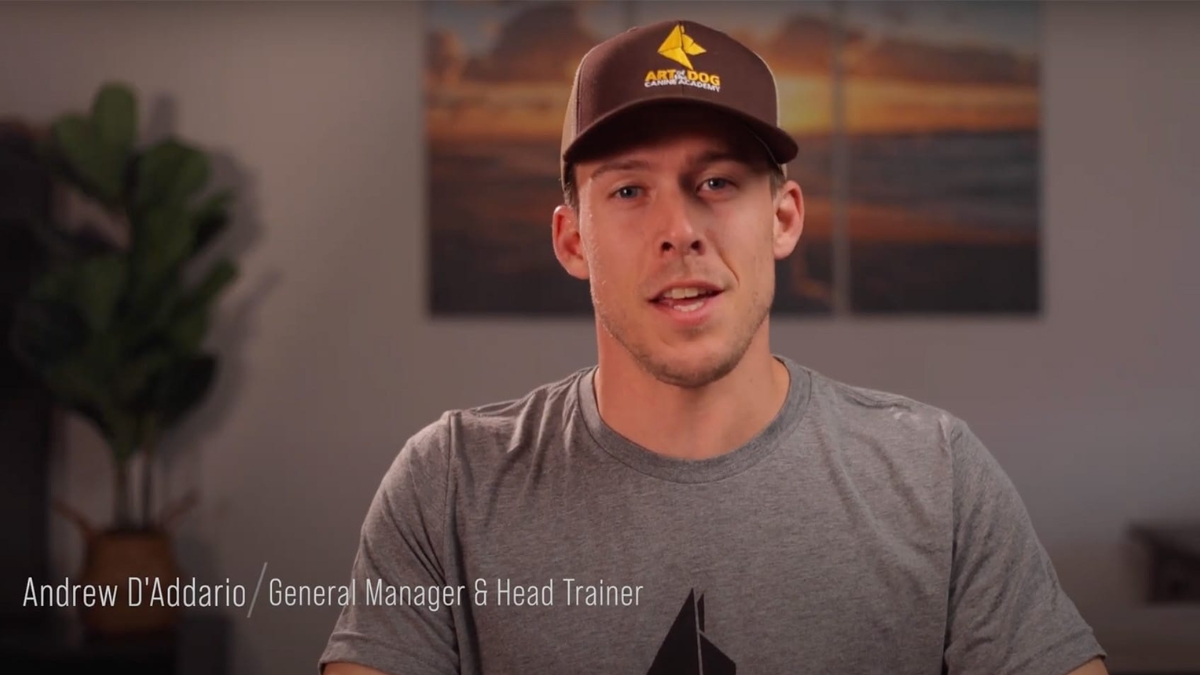
No. A well-run board and train isn’t cruel, and you should never have to take that on faith. At Art of the Dog Canine Academy, every dog is weighed daily, every meal and bathroom break is charted, and you hear from us at the first sign of anything unusual, whether that’s an upset stomach or a sneeze.
I’m Andrew D’Addario, General Manager of our Denver academy at Art of the Dog Canine Academy. Safety is one of our core values, and I want to walk you through exactly how we keep your dog comfortable, safe and healthy for all 21 days.
If your dog could tell you about their three weeks
If at the end of the three weeks you could sit your dog down at dinner and they could tell you about their experience, what they’d tell you is exactly what we already told you.
Whether your dog shows no signs of stress or has a stressful time, you hear from us every step of the way. We have system upon system to keep the chances of something going wrong as small as possible, and systems so that if we notice any deviation from a normal, healthy, happy pup, we let you know immediately.
That’s the real answer to “is board and train cruel?” It comes down to what a program does when you’re not watching, and whether it tells you.
What a day looks like: training, rest and the crate
Your dog lives at our academy for 21 days and is trained every single day, weekends and holidays included: three to five sessions a day, each 30 minutes to an hour, for somewhere between 65 and 100 sessions by graduation. One trainer works four dogs at a time; the industry standard is typically one trainer for ten. Your dog’s primary trainer sends you updates with videos and pictures, and your dog’s weight comes with them.
There is a sharp increase in crate time. That’s mostly for safety: we work with a wide range of dogs and behaviors, and much like a toddler, any time a dog isn’t supervised, they’re back in the crate. It also helps their head space. Many dogs come to us with separation anxiety, aggression or fearful behavior, and the structure and routine help them settle into a calmer state of mind. Trainers are in from 7 AM, when sessions start, until around 9 PM, and dogs are crated overnight.
The crates are the most heavy-duty, sturdy crates we can find. We’ve never had a dog come close to breaking out. We rinse crates with water even after pet-safe cleaners.
You can see the whole process on our 21-day Denver board and train program page.
The daily health checks behind every dog
Every day we track how your dog is eating and going to the bathroom, and we weigh every dog. It goes on a feeding chart, and everyone who fills it out initials it.
Weight loss can be fairly common in a kennel environment, from stress, a pickier appetite, missing table scraps, or simply far more activity. If a dog loses 5% of their starting weight, one of our head trainers calls you with options. For a lot of dogs, the weight stabilizes after the first week. If a dog isn’t eating well, we keep chicken broth and boiled chicken on hand to stimulate their appetite, and you’re welcome to send a probiotic that helps your dog’s stomach.
The common issues, and how we handle each one
As much as we try to keep every dog healthy, happy and comfortable, some things can come up. Here’s what we see and what we do.
Upset stomach. GI upset often comes from stress: a new environment, not eating well. It can look like diarrhea or vomiting, and we tell you immediately. It usually resolves in a couple of days. If it’s been a few days and you’d like your dog home, that’s always your option. We never insist on keeping a dog.
Kennel cough. We require every dog to be vaccinated for Bordetella, but much like a flu shot, that doesn’t mean a dog can’t catch it. It isn’t common at our facility, but we do see it come and go. It’s a lot like a common cold, and most dogs get through it without real medical treatment. Our whole team is trained to notice a sniffle or a couple of coughs, write it down and reach out. You hear about it at the first sign, not on the way to the emergency room. If you’d like your dog picked up or seen by a vet, even if you live two hours away, we can do that.
Hot spots and lick spots. A hot spot can come from an e-collar sitting in one spot, and we see very few on the neck because our staff rotates the collars. Lick spots are more common: a bored dog licks the same spot until it’s like a chapped lip on their paw. They don’t bother the dog and heal quickly at home, but we don’t want you discovering one on graduation day, so we tell you and treat it with a spray that helps it heal.
We’re not perfect, and I’d rather you hear that from me. On a dog with very long hair, we can miss a hot spot.
Out and about. We take your dog to parks and walk them in neighborhoods, so the same risks you have at home come with us. Bug bites are one; I think we’ve seen three in about 1,500 dogs. They’re rare, and the dogs have all been fine.
Clearance levels: how intense dogs and friendly dogs share one academy
Every dog and every trainer has a clearance level: green, blue, yellow or red.
A green dog has never met a stranger. A blue dog might bark at other dogs but is still pretty friendly. Yellow and especially red dogs are the serious cases: extreme reactivity, dogs that might be actively trying to bite us.
Trainers work the same way. A green trainer has been here about a month and handles the very friendly, easy dogs. Reaching red clearance usually takes close to a year, around six months for someone who’s really crushing it. So we know our more dangerous dogs are in good hands, and that they’re not getting to our friendly dogs. If your dog is one of those serious cases, our aggressive dog training in Denver page explains how we work with them.
Every dog is on a structured leash at all times, and dogs never interact unless they come from the same home. That’s how Golden Retrievers, Labs and happy, healthy pups share a roof with very intense behaviors, and both can go three weeks without an incident.
What about the e-collar?
The e-collar is often the real worry behind “is board and train cruel?” We have protocols for where it sits on the neck and how long a dog wears it each day. We introduce it step by step, starting with leash pressure, so the dog learns its own behavior turns the pressure off and is never left confused. Hot spots come from the contact points, not the stimulation, which is why we rotate the collars.
If that’s the part you’re unsure about, read are e-collars cruel? an honest answer from a trainer who uses one every day.
Why you’ll hear about every sneeze
The status quo at a lot of board and train facilities is to be reactive: wait until something is obviously bad before telling the owner. Almost always, that stomach settles, that cough goes away and that hot spot isn’t a big deal. But if my dog were somewhere for three weeks, I’d want to know everything. And for the rare cough that does progress, you’re not first hearing about it while we’re driving your dog to the vet.
There’s probably a 50% chance you’ll hear from us at some point. Don’t worry when you do; we’re being up front.
It also builds trust. When I tell you your dog has an upset stomach, you know I’m being straight with you. So when the next text says your reactive dog did amazing at Wash Park, you know that’s true too.
After the three weeks
At graduation we show you everything your dog has learned and hand you the leash, followed by a year of scheduled follow-up and lifetime support. If you’re weighing whether it all adds up, read is board and train worth it?, or watch our full consultation video series, including the safety chapter this article comes from.
FAQ
Is board and train safe for my dog?
It should be. We weigh every dog daily, chart every meal and bathroom break, use heavy-duty crates, and keep every dog on leash with no contact between dogs from different homes. Our goal is to be the safest board and train in the country, and you hear from us about anything out of the ordinary.
Will my dog get kennel cough at board and train?
It’s possible but not common. We require the Bordetella vaccine, but like a flu shot, it doesn’t rule kennel cough out. It’s usually like a common cold. We tell you at the first sniffle or cough, and you can choose a pickup or a vet visit.
Do dogs lose weight at board and train?
Some do, from stress, a new routine or a lot more activity. We weigh your dog every day and send the weight with your updates. If a dog loses 5% of their starting weight, a head trainer calls you with options. Weight often stabilizes after the first week.
Is my dog in a crate all day?
No. Your dog trains three to five sessions a day, 30 minutes to an hour each, plus walks and park trips. Between sessions and overnight they rest in a crate, for safety and because the structure helps them settle into a calmer head space.
Will my dog be around aggressive dogs?
Not in contact with them. Every dog has a clearance level, and only trainers cleared for the most serious cases handle them. All dogs are on leash at all times, and dogs never interact unless they come from the same home.
Is board and train good for dogs?
For many dogs, yes. The structure, routine and three to five training sessions a day help a lot of dogs, including anxious, reactive and aggressive ones, settle into a calmer head space. It works best when the program tells you honestly how your dog is doing, every day.
Ready to talk about your dog? Start a Conversation
Ready to talk about your dog?
Serving Denver & Longmont, Colorado · In operation since 2019