Inside a 21-Day Board and Train: What Actually Happens, Day 1 to Graduation

In a 21-day board and train at Art of the Dog Canine Academy, your dog lives at our academy and trains every day, weekends included. The first half teaches the rules; the second half proofs them in the real world. Three to five sessions a day total 65 to 100 by graduation, with one trainer for every four dogs.
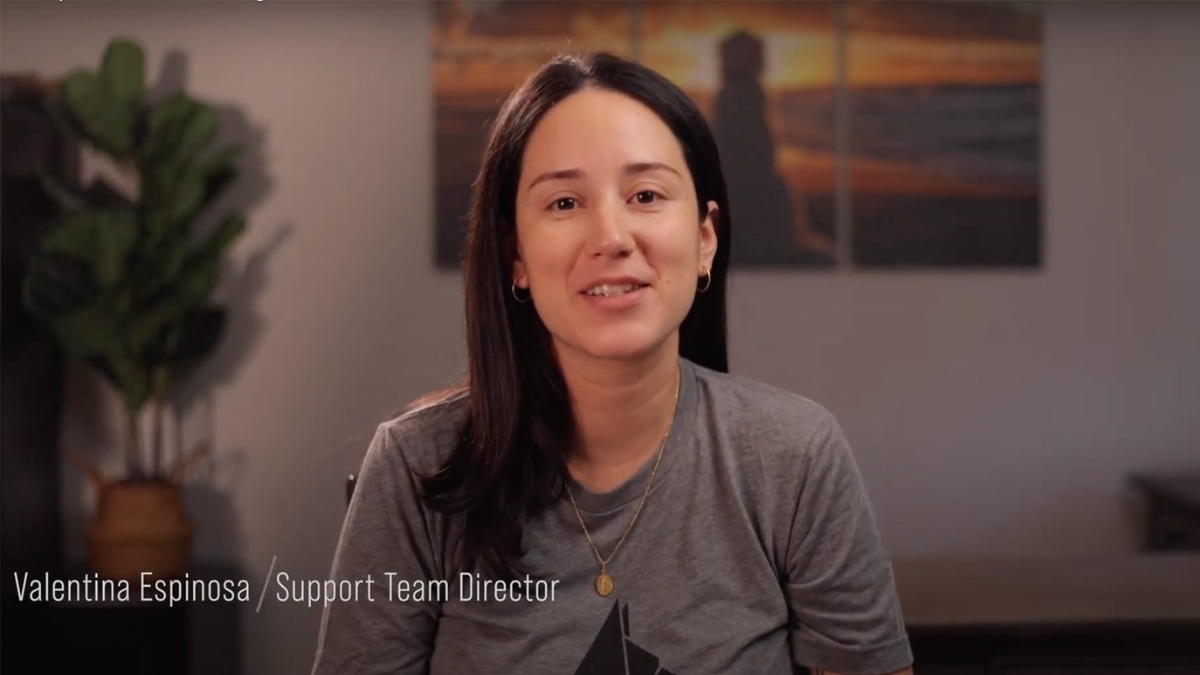
I’m Andrew D’Addario, General Manager of our Denver academy at Art of the Dog Canine Academy. Valentina Espinosa manages our support team, hosts our consultations and helps every new family through onboarding, so most of what follows is in her words.
The short version: 21 days, two phases
“We focus on the board and train, and the board and train only,” Valentina says. “Our program is three weeks long, so your dog will be coming and staying with us for 21 days.”
The first half of the program is us setting all the rules and expectations, mostly here at the academy. The second half is proofing those behaviors: making sure your dog understands the rules and expectations in the real world. That means structured walks around other dogs and other people, park trips, and Wash Park, which has a ton of distractions. The point is to show your dog that the rules hold everywhere and with everyone.
Everything the program includes is on our 21-day Denver board and train program page.
Before day one: you start learning too
When your dog arrives, you receive a 12-video course. It’s there to prepare you for graduation day, so you’re not overwhelmed with everything being thrown your way at once. While your dog is at school learning, you’re learning.
Your dog is assigned a primary trainer, who is in five days a week. On those days you get updates from them, with videos and pictures, about how your dog is doing in training and how to get ready for graduation.
What a day at the academy looks like
Your dog is trained every single day while they’re with us, weekends and holidays included. Here’s the shape of a typical day:
- 7:00 AM: trainers arrive and the rotations begin. That’s when the day’s sessions start.
- Through the day: three to five training sessions. Each one lasts anywhere from 30 minutes to an hour, depending on where your dog is in the program.
- Between sessions: your dog rests in their crate. Any time they’re not being trained, they’re back in the crate.
- Second half of the program: structured walks and park trips around Denver join the schedule.
- Around 9:00 PM: trainers leave and dogs are crated overnight.
One trainer works four dogs at a time. The industry standard is typically one trainer for ten. By the end of the program, your dog has had somewhere between 65 and 100 training sessions.
Why the crate time is intentional
There’s a sharp increase in crate time while your dog is with us. That’s mostly for safety: we work with a wide range of breeds and behaviors, and similar to a toddler, any time a dog isn’t being supervised, they’re back in the crate.
It also helps a lot with their head space. Many dogs come through our program with separation anxiety, aggression or fearful behaviors, and the structure and routine help them settle into a calm head space. We want them more focused on us than on everything else around them.
“The crate time is all very intentional here,” Valentina says. “It’s not just for safety reasons. This is something that’s going to benefit the training in the long run.”
If you’re wondering what keeps dogs healthy and comfortable for three weeks, from daily weigh-ins to how we handle an upset stomach, read is board and train cruel? the safety systems behind every dog in our care.
The first half: teaching
The first half of the program is the teaching phase, where we set expectations. We teach leash pressure with the prong collar, and positive reinforcement is heavily used during this phase.
Dogs find leash pressure very easy to follow. We pull in a direction, the dog gives to the pressure, and they learn the release. We teach it with things your dog may already know, like sits, downs and not pulling, so they learn their own behavior is how the pressure goes away. Then we layer in the e-collar the same way, step by step, so it’s never a mystery to the dog.
If the e-collar is the part you’re unsure about, read are e-collars cruel? an honest answer from a trainer who uses one every day.
The second half: proofing in the real world
“The second half of the program is where we proof for all these behaviors,” Valentina says. “We’re going to put your dogs to the test after they’ve learned everything.”
That means walks around other dogs and other people, park trips around Denver and Wash Park, and scenarios that mimic what you’d see in your day-to-day life.
Graduation day
At the end of the three weeks, we host a graduation. We typically do it at a park with a ton of distractions, and it runs about an hour and a half to two hours.
During the first part, we show you everything your dog has learned and how to reinforce all of the training. We show you how the e-collar works: when to correct, and when not to. In the second part, we hand the leash and the e-collar over to you, so you leave comfortable communicating with your dog and reinforcing the training yourself.
After graduation: homework, follow-ups and lifetime support
When you get home, a homework packet is waiting in your inbox. It continues your education, with clear steps, a progress tracker, a library of troubleshooting videos and answers to frequently asked questions.
“Even if you complete 25% of this homework packet, you’re going to see a ton of success,” Valentina says. “I’m the type of person that needs to know exactly what to do, so this homework packet provides a ton of clear communication as to how to continue your education after the training.”
Graduation is also where our year-long post-graduation follow-up begins. Our support team reaches out to you the day after graduation, then three days after, one week, two weeks, one month, two months, four months, six months, eight months and at the one-year mark, to dig for problems before they grow. If something comes up, we start with a call and a video made for that exact problem, and we schedule a one-on-one if it persists. Those one-on-ones are unlimited, for the rest of your dog’s life, as needed. That’s our lifetime support, and it’s why is board and train worth it? comes down to what happens after the three weeks.
The 21 days at a glance
- Length: 21 days, live-in at our academy
- Phases: teaching first, then proofing in the real world
- Training days: every day, including weekends and holidays
- Sessions: three to five a day, 30 to 60 minutes each, 65 to 100 in total
- Trainer ratio: one trainer to four dogs (industry standard is typically one to ten)
- Owner prep: a 12-video course while your dog trains, plus updates with videos and pictures from your primary trainer
- Graduation: about 1.5 to 2 hours at a park with real distractions
- After: a homework packet, ten scheduled check-ins in the first year, then lifetime support
“The last thing we would want for you to feel is that you’re just dropping off your dog at a random place for three weeks and hoping for some training and some success,” Valentina says. “From the moment you reach out to us to the moment your dog graduates and beyond, we want you to feel like you have our support.”
You can watch Valentina walk through the whole process, and the rest of our consultation series, on our how it works page.
FAQ
What does a 3-week board and train look like?
At our academy, your dog lives with us for 21 days. The first half teaches the rules and expectations at the academy; the second half proofs them on walks, at parks and around Denver. Your dog trains three to five times a day, every day, and the program ends with a graduation where we hand the leash to you.
Do dogs train on weekends at board and train?
Yes. Your dog is trained every single day while they’re with us, including weekends and holidays. Your primary trainer is in five days a week and sends you updates with videos and pictures on those days.
What is the trainer-to-dog ratio?
One trainer works four dogs at a time. The industry standard is typically one trainer for ten dogs.
How many training sessions does my dog get?
Three to five sessions a day, each 30 minutes to an hour depending on where your dog is in the program. By graduation, that’s somewhere between 65 and 100 training sessions.
What happens at graduation?
We meet you at a park with plenty of distractions for about an hour and a half to two hours. We show you everything your dog has learned, how the e-collar works and when to correct, then hand the leash and the e-collar to you. A homework packet and our year of scheduled follow-ups start from there.
Can my dog get kennel cough at board and train?
It’s possible but not common. We require every dog to be vaccinated for Bordetella, though like a flu shot that doesn’t rule it out. It’s usually like a common cold, and we tell you at the first sniffle or cough.
Ready to talk about your dog? Start a Conversation
Ready to talk about your dog?
Serving Denver & Longmont, Colorado · In operation since 2019