Dog Trainer for Aggressive Dogs: A Specialist’s Guide

The right dog trainer for aggressive dogs won’t promise to fix or cure your dog. A good one gives your dog a clear system of communication, then teaches you to manage the behavior and advocate for your dog in the real world. Look for honesty about limits, a muzzle protocol, real-world proofing, and support that continues after training.
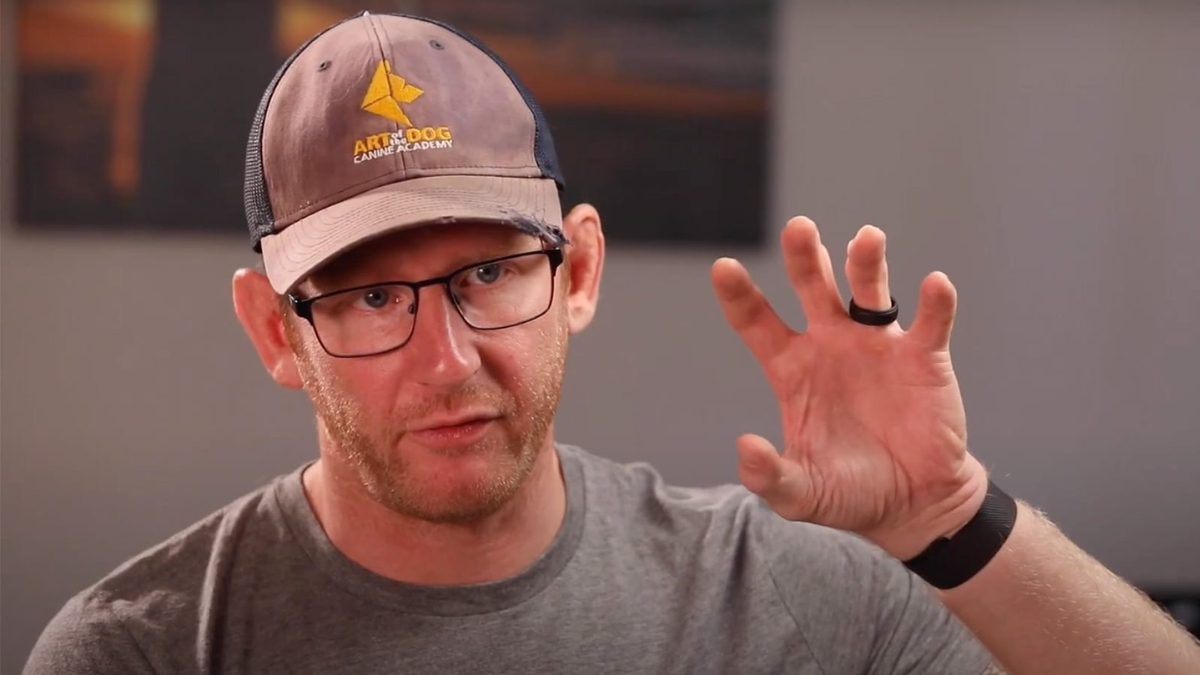
I’m Ian Lieberman, co-founder of Art of the Dog Canine Academy. I’ve lived with a dog-aggressive German Shepherd his whole life, and he’s a big part of why my brother Will and I started AODK9 in 2019.
What a trainer can and can’t do for an aggressive dog
Let me start with what you should expect not to happen. We are not going to change your dog. As far as we know, that’s impossible. A lot of websites use words like fix, solve and cure, and I don’t think those words accurately describe this work. Maybe some trainer out there has a magic spell, but we haven’t seen it.
A more accurate picture: we give your dog a system of communication they understand. Then we give you a way to manage your dog so you can both live safely and comfortably. That’s the core of how we approach aggressive dog training.
Think about someone with arachnophobia. The realistic goal is to help them live in a world where spiders might be present. Nobody expects them to jump happily into a nest of spiders. It’s the same with a dog who’s petrified of other dogs or people. If a trainer tells you they can train the aggression out of your dog, I’d be skeptical. That doesn’t sound like psychology to me.
My dog Ulf: why I ended up doing this
Ulf, my German Shepherd, is the best dog on this planet. I’ve never had a relationship like the one I have with him. He’s also very dog aggressive. Those two things can exist together. An aggressive dog isn’t a bad dog or a dog you can’t live with, but it probably does mean things are going to have to change.
Early on he started reacting to big fluffy dogs about 10 feet away. It was cute for about three days. Within a few weeks it had escalated to any dog in his line of sight, even one a football field away: hackles up, barking, growling, dragging me down the street.
I started out firmly in the reward-only camp. I’d done all the reading, and there was no way you were coming near me with an e-collar or a prong collar. So I hired a behaviorist and did counter-conditioning, feeding treats while another dog stayed at a distance, hoping Ulf’s unhappy association with other dogs would turn into a good one.
That moment never came. She was very nice and her intentions were good. I did every bit of my homework, for months. One day an older man walked by with his dog while Ulf was barking and growling and hot dogs were flying everywhere. Will looked at me and said, “Dude, I got bad news. This is not working.”
About ten or eleven months in, I had Ulf on leash at a park and I was on my phone, not paying attention. A Weimaraner ran up off leash, and Ulf grabbed its neck and clamped down. There was blood all over my arms by the time I got him off. If you’ve ever seen a dog attack up close, you know that moment of I don’t know who my dog is.
I went straight to the behaviorist. First, she said I should rehome him because he was too much dog for me. When I said maybe I needed to consider an e-collar or a prong collar, she told me that if I used any of that equipment, she would no longer work with me.
Sometimes rehoming is the right decision, and it’s a horrible one to have to make. But Ulf didn’t need a new home. He needed the right approach and the right training. Today I get to live a very rich life with him because of it.
The Hulk analogy: why aggression is managed, not cured
I always use the Hulk analogy. Bruce Banner is the mild-mannered guy everybody likes: your dog at home, the one you wish the world could see. Then you take him out, the outside stressors pile up, and he calls on the Hulk. Once he’s past threshold, he doesn’t see clearly anymore.
In the movies, the whole plot is the search for a cure, and of course there is no cure. It’s all about management: managing his behavior and his mindset so he never turns into the Hulk. That’s what I’m always doing with Ulf.
The right kind of exposure, and becoming your dog’s advocate
You may recognize this pattern. Walks become a chore, so you stop taking them. Your dog gets less exposure to the world, and things get worse. It’s a downward spiral.
Our goal is to open those doors back up with the right kind of exposure. What we’re not doing is flooding. If your dog is afraid of lawnmowers, we’re not taking him to a lawnmower factory on day one. We use controlled exposure, so triggers can become neutral.
Ulf still doesn’t like other dogs, and he never will. But when my wife and I go to Steamboat, he comes with us. He’s expected to heel, sit and down, and he can’t lunge or bark. What I don’t do is let other dogs run up to him. When someone’s friendly golden retriever comes charging over and the owner yells “my dog’s friendly,” I step in front of Ulf, keep a buffer, and politely ask them to leash their dog.
That’s what it means to be your dog’s advocate. A dog who’s barking and lunging is advocating for himself. Will says it well: being a leader isn’t about getting protected. When you’re a leader, you protect. Most owners don’t need a different dog. They need the know-how to do this for the dog they have.
Situations owners bring to us
“My dogs are fighting each other.” For years I told people in consultations we’d gone eight years without incident. Then we had another one. We’d been giving our new dog, Clementine, high-value bully sticks all the time, while Ulf only got one now and then. We’d built scarcity into the equation. One day I heard the scuffle from the other room, and Ulf was attacking Homer, our other male dog. We shouldn’t have been giving treats in the same room. I’d gotten complacent. Management inside the home counts as much as management on the street.
“We have young kids, or a baby on the way.” When your household changes, the margin for error shrinks. That’s when structure, supervision and a muzzle-conditioned dog matter most, and we talk it through in detail before your dog comes to us.
“We adopted him like this,” or “We already tried training.” You didn’t create your dog’s history. And if you’ve already worked hard with someone who meant well, as I did, it usually wasn’t your effort that fell short. The approach just wasn’t built for your dog.
What to look for in a dog trainer for aggressive dogs
Here’s what I’d want to know before trusting anyone with Ulf:
- Honest language. Be wary of any trainer who says aggression can be cured or fixed. A trustworthy one tells you what will and won’t change.
- A real system of communication. We use basic obedience as the vehicle. Your dog learns what’s expected in a stressful moment, so we can safely work him around his triggers.
- Transparency about tools. We use a prong collar and an e-collar alongside plenty of positive reinforcement, and we explain every part of it to you.
- A muzzle protocol. It isn’t a statement about your dog. It keeps everyone safe. Clementine, my golden retriever, is friendly with everyone and still muzzle-trained, so grooming is never a problem.
- Real-world proofing. Anyone can get a good sit in a quiet room. Ask how it holds up around dogs, people and distractions.
- Support after training. With an aggressive dog, vigilance never ends, so the support shouldn’t either.
How we work with aggressive dogs at Art of the Dog in Denver
Our 21-day live-in board and train runs out of two academies, one in Denver and one in Longmont. We’ve trained more than 4,000 dogs since 2019.
Your dog trains every day, weekends included, with 3 to 5 sessions a day. Each trainer works with four dogs at a time, where the industry standard is closer to ten. The first half of the program is teaching at the academy. The second half is proofing: structured walks around other dogs and people, plus park trips around Denver, including busy spots like Wash Park.
At graduation, we show you everything your dog has learned and how the tools work, then hand the leash to you. Lifetime support follows, because keeping a trained dog is a lifestyle.
If you’re in the Denver area, start with our page on aggressive dog training in Denver, or see how our 21-day Denver board and train program works. You can also watch the full consultation video series, including the chapter this guide comes from.
FAQ
Can an aggressive dog be cured?
No, and honest trainers won’t claim otherwise. Training gives your dog a clear system of communication and gives you the skills to manage the behavior safely. Many aggressive dogs go on to live full, active lives, but management continues for life.
Will training change my dog’s personality?
No. A dog who dislikes other dogs will probably always dislike them. What changes is behavior: your dog learns to stay calm and under control around triggers, and you learn to keep him below threshold.
Does my dog need to wear a muzzle?
Dogs who come to us for aggression arrive muzzle-conditioned, meaning they’re comfortable wearing a muzzle for extended periods. It’s a safety protocol, not a judgment, and we send you a video on how to condition your dog before arrival.
Will my dog wear an e-collar after training?
Yes. Good training depends on clarity and consistency, and removing the e-collar takes away your ability to be consistent. At graduation we teach you exactly how and when to use it, alongside plenty of positive reinforcement.
Is board and train a good option for an aggressive dog?
For many aggressive dogs, yes. An immersive program means daily work and controlled exposure to triggers instead of one hour a week. What matters most is what happens after: the handover, your follow-through at home, and ongoing support.
Ready to talk about your dog? Start a Conversation
Ready to talk about your dog?
Serving Denver & Longmont, Colorado · In operation since 2019