Fear Aggression in Dogs: Your Dog Isn’t Mean, They’re Overwhelmed

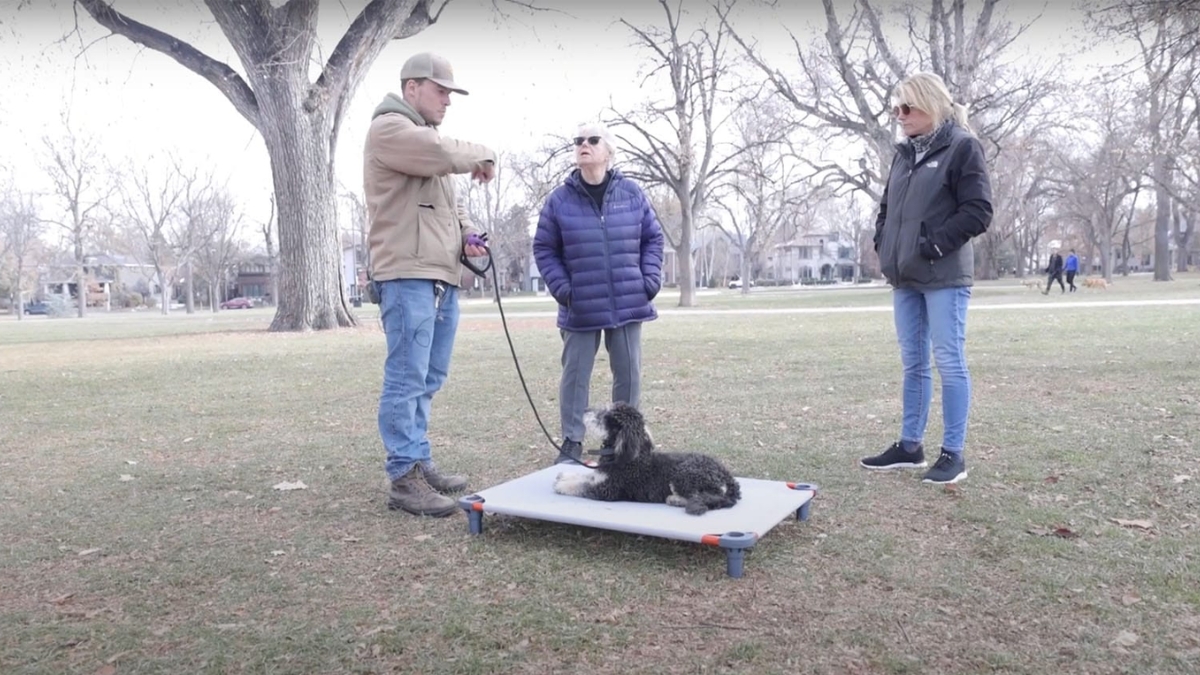
Fear aggression in dogs is fear that spills over into barking, lunging, growling or biting when something scary gets too close. It isn’t a sign of a mean dog. Training won’t make your dog love their triggers, but clear communication and controlled exposure can teach them to stay calm around them.
I’m Ian Lieberman, co-founder of Art of the Dog Canine Academy. My German Shepherd, Ulf, is dog aggressive, and for Ulf it’s fear. He really doesn’t like other dogs. A lot of what I know about fear aggression, I learned on the other end of his leash.
Your dog isn’t a bad dog
If someone has told you your dog is aggressive and that doesn’t match the dog you know at home, I understand. Ulf is the best dog on this planet. I’ve never had a relationship like the one I have with him. He’s also very dog aggressive. You can have a dog who’s aggressive and a dog you love, and those two things can exist together.
I always use the Hulk analogy. Bruce Banner is the mild-mannered guy everybody likes. That’s your dog in the house, the sweet dog you wish the world could see. Then you take him out, the outside stressors pile up, and he calls on the Hulk. Once he’s past threshold, he doesn’t see clearly anymore.
Fear can surprise you even in a dog who has never shown aggression. My golden retriever, Clementine, is sweet and friendly with everyone. She’s not aggressive at all. But she gets scared, and when dogs are fearful they can do things that are unexpected. That’s why she’s trained to wear a muzzle, so grooming is never a problem.
That idea, that fear sits underneath so much of what looks like aggression, runs through everything we do in dog anxiety training.
What fear aggression looks like
A few dogs we’ve worked with, including mine:
- Reacting at a distance. Ulf started by barking at big fluffy dogs about 10 feet away. Within a few weeks it was any dog in his line of sight, even one a football field away: hackles up, barking, growling, dragging me down the street.
- Lunging and barking at one kind of trigger. Flaky, a dog we had the pleasure of working with, was worried about anything with wheels: skateboards, rollerblades, things that move fast. Any sight of a skateboard meant fearful lunging, barking and aggressive behavior.
- A bite when the fear has nowhere to go. Flaky ended up biting a plumber who came into the house. That’s when his owner reached out to us.
Common triggers we see are other dogs, people, lawnmowers, skateboards and anything with wheels.
Why fear aggression gets worse: the downward spiral
If you have a fearful or aggressive dog, you can probably relate to this. You want to go on walks and enjoy your lives together, but taking your dog anywhere is a chore. It’s stressful for you and it’s stressful for your dog.
So, completely understandably, people stop. You stop going on walks. You stop taking your dog places. Your dog gets less and less exposure to the world, and things just get worse.
That’s what happened with Flaky. His family started closing doors because they couldn’t take him out in public. He had this one picture of the world, being afraid of wheels and things that move fast, and it got worse and worse. We were able to go the other direction.
Controlled exposure, not flooding
Our goal is to open those doors back up with the right kind of exposure. What we’re not doing is something called flooding. If your dog is really afraid of lawnmowers, we’re not taking him to a lawnmower factory on day one. That’s never the goal.
Here’s how it works instead. Let’s say my dog is afraid of other dogs:
- Set the expectation. I use the equipment to show my dog what I’m asking for, say, staying calmly in a heel at my side.
- Walk past at a distance. Once he understands the heel, I walk by other dogs far away. He starts to see: I’m walking by this dog and nothing bad is happening.
- Close the distance. Over time, we get closer to the other dog, the stressor, while he stays in the heel.
It’s a lot like exposure therapy, done in a very controlled way. In time, dogs become less fearful because they see the stressor isn’t causing problems, and all they need to do is follow our lead. It comes back to advocating for your dog and showing them: follow me, and I’ll handle all this scary stuff.
Won’t an e-collar make my fearful dog worse?
This is one of the most common questions we get, and it seems like a logical conclusion to jump to. But when you dig a little deeper, the e-collar and the equipment let us get control over a dog’s head space, so we can start exploring that territory and working around the things that trigger them.
The equipment isn’t there to scare the dog. It’s there to set an expectation the dog can understand, so we can safely get them around what they’re afraid of. If you want the longer answer on the tool itself, here’s how we use the e-collar and why it isn’t cruel.
Flaky’s story
The first thing we did with Flaky was show him our expectations. In a very calm and calculated way, we taught him what sit means, what down means, and what the equipment means in relation to those.
Once he had that understanding, we took it into the real world and slowly introduced skateboards and other things with wheels, again in a controlled way. Flaky started caring more about following my lead than about the skateboard. In time he got more comfortable, and we were able to close the gap.
Now Flaky goes out to local parks. He still doesn’t love skateboards, and he still doesn’t love things with wheels. But he’s able to be around them and live a much better life. We see that happen so frequently: we open up possibilities for fearful dogs whose world had been closing in.
What training changes, and what it doesn’t
It’s very important that I say this: your dog will always be themselves. If my dog is afraid of other dogs or doesn’t like other dogs, I’m never going to make that go away. Our goal is to make your dog the best version of themselves, able to be around their triggers without the explosive, fearful reaction.
Think about someone with arachnophobia. The realistic goal is to help them live in a world where spiders might be present. Nobody expects them to jump happily into a nest of spiders.
Ulf is very well trained. I’ve done competition obedience with him. He still doesn’t like other dogs, and he never will. When my wife and I go to Steamboat, he comes with us, and he’s expected to heel, sit and down. He can’t lunge or bark. What I don’t do is let other dogs run up to him. I step in front of him, keep a buffer, and politely ask the other owner to leash their dog.
That’s what it means to be your dog’s advocate. A dog who’s barking and lunging is advocating for himself. My brother Will says it well: being a leader isn’t about getting protected. When you’re a leader, you protect.
And stay vigilant. With a fearful or aggressive dog it’s very easy to get complacent after a long stretch of good days. You can do a lot of fun things and live a much better life together, but the management never stops. I tell the whole story of Ulf, and the behaviorist who told me to rehome him, in our guide to choosing a dog trainer for aggressive dogs.
Fear aggression training at Art of the Dog in Denver
Our 21-day live-in board and train runs out of two academies, one in Denver and one in Longmont. We’ve trained more than 4,000 dogs since 2019.
Your dog trains every day, weekends included, with 3 to 5 sessions a day. Each trainer works with four dogs at a time, where the industry standard is closer to ten. The first half of the program is teaching at the academy. The second half is proofing: structured work around other dogs, people and real-world distractions, using the same controlled exposure Flaky went through.
At graduation we show you everything your dog has learned and how the tools work, then hand the leash to you. Lifetime support follows.
If your dog’s fear mostly looks like worry, start with anxious dog training in Denver. If it has tipped into lunging, growling or biting, see aggressive dog training in Denver.
FAQ
What is fear aggression in dogs?
Fear aggression is aggressive behavior, like barking, lunging, growling or biting, that comes from fear rather than from a dog wanting to fight. The dog is overwhelmed by a trigger, such as another dog, a person or something with wheels, and once they’re past threshold they don’t see clearly anymore.
Can fear aggression be cured?
No, and an honest trainer won’t promise that. Training gives your dog a system of communication and gives you a way to manage the behavior safely. Your dog will always be themselves, but many fearful dogs learn to stay calm around their triggers and live much fuller lives.
Will an e-collar make my fearful dog worse?
Not when it’s used the way we use it. The equipment sets a clear expectation, like staying calmly in a heel, so we can bring the dog near their triggers in a controlled way. Over time the dog sees the stressor isn’t causing problems and follows your lead instead of reacting.
Should I just avoid my dog’s triggers?
Avoiding everything tends to make fear worse, because the dog’s world keeps shrinking. Throwing your dog into the deep end, called flooding, isn’t the answer either. The middle path is controlled exposure: start at a distance your dog can handle and close the gap over time, while you keep advocating for them.
Does a fearful dog need to be muzzle-trained?
It’s a good idea for any dog. Fearful dogs can do unexpected things, even friendly ones. My golden retriever is sweet with everyone and still muzzle-trained so grooming is easy. Dogs who come to us for aggression arrive muzzle-conditioned, and we send owners a video on how to do it.
Ready to talk about your dog? Start a Conversation
Ready to talk about your dog?
Serving Denver & Longmont, Colorado · In operation since 2019